Lead Generation Automation for Insurance Agents
Understanding Lead Generation Automation
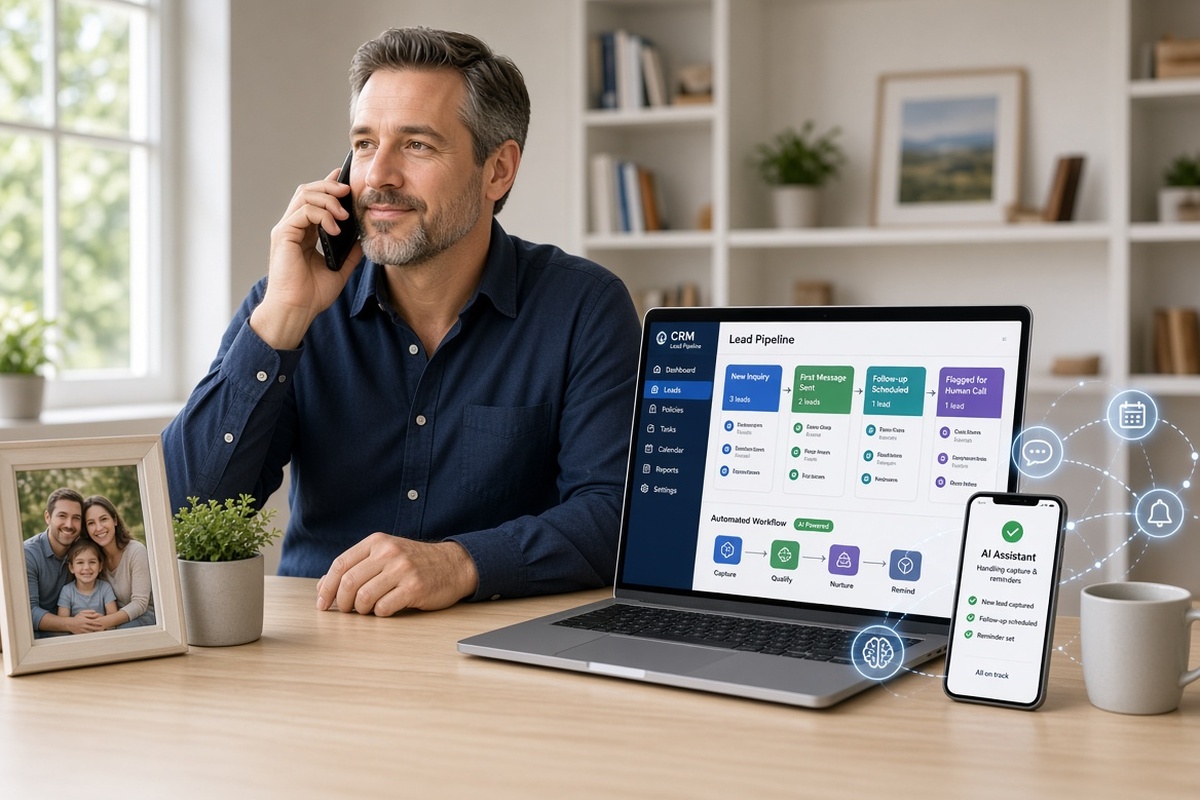
Lead generation automation streamlines the process of acquiring leads for insurance agents, reducing labor intensity and improving efficiency through AI tools. When I sit with that sentence, I hear the part of the job that eats the day before you’ve even talked to a person. You’re not only hunting for names. You’re chasing forms, reminders, follow-ups, and the quiet pile of “I’ll get to it later” that grows when the phone won’t stop. Lead generation automation is the practice of letting software take those repeatable steps so a new inquiry can be captured, sorted, and moved forward without you typing the same note for the hundredth time. I’ve worked with tools such as n8n and Go High Level to automate repetitive tasks, and that kind of setup is less about replacing the agent and more about clearing the desk so the human part of insurance can actually happen. For an insurance agent, relevance isn’t a slogan. It’s whether you still have time for a family dinner after a week of prospecting, and whether procrastination around follow-up is a character flaw or just a calendar that’s too full. Well, it’s been said that leads are the lifeblood of an agency, and that still holds. What changes is how much of your own stamina you have to spend to keep that flow moving. Automation, in this sense, is a set of rules and helpers that watch for a new contact, send the first note, log the activity, and flag who needs a real conversation. You stay in charge of the relationship. The software stays in charge of the busywork. That split is the whole point, and it’s why this topic belongs in an insurance day, not only in a tech brochure. See also:Insurance Lead Generation Funnels & Quizzes.
Benefits of Lead Generation Automation
The benefit that matters first is simple, and it’s one I’m willing to state plainly. Lead generation automation streamlines the process of acquiring leads for insurance agents, and automation reduces the labor intensity of lead acquisition for insurance agents. Everything else is detail around that core. You still have to be present when someone is ready to talk about a policy, a change in a household, or a worry they don’t want to leave unaddressed. What you don’t have to do is rebuild the same outreach path by hand every Monday. I don’t need a stack of charts to tell you that a labor-intense hunt for leads crowds out the work you’re actually licensed to do. When the pipeline runs with fewer manual touches, you get an opportunity to be the person who listens, not only the person who types. Perfectionism can sneak in here, because it’s tempting to feel that if you didn’t personally send every message, it doesn’t count. Hearing that kind of pressure in your own head is common. It doesn’t mean you care less. It often means you’ve been carrying a process that was never designed for one pair of hands. Until one day you notice that the hours you used to spend copying names between screens are sitting there unused, and you can put them back into calls, reviews, and the people who already trust you.
Reduced Labor Intensity
Automation reduces the labor intensity of lead acquisition for insurance agents, and that sentence is doing a lot of honest work. Labor intensity, in this job, is the grind of finding a name, checking whether you’ve already spoken, writing the first outreach, waiting, writing again, logging what happened, and starting over. None of that is the hard part of insurance in the human sense. It’s just volume. When a workflow watches a form, a list, or an inbox and carries the first steps for you, you stop being the machine that copies the same paragraph. I’ve worked with tools such as n8n and Go High Level to automate repetitive tasks, and the feeling I keep coming back to is the relief of not redoing the same small motion. You can still review what goes out. You can still decide who gets a personal call. You’re not handing your judgment to a black box. You’re handing the clipboard to something that doesn’t get tired. For agents who also run a household, that reduction isn’t abstract. It’s an evening that doesn’t start with leftover admin, and it’s a morning that doesn’t open with a knot in the stomach about how many people you didn’t get back to. Reduced labor intensity doesn’t mean the work disappears. It means the work that only you can do finally has room. See also:Best Tools for Insurance Lead Generation (2026).
Improved Efficiency
Efficiency, in the way I’m using it here, is not a trophy. It’s whether the path from “someone showed interest” to “you’re in a real conversation” has fewer stalls. Lead generation automation can keep a lead from sitting untouched because you were in appointments all afternoon. It can keep a reminder from depending on your memory. I want to be careful, because I don’t have a study in front of me that proves a specific jump in speed or a specific lift in how many people reply, and I’m not going to pretend I do. What I can say is that when repeatable steps run without waiting on you, the calendar stops being the bottleneck for every tiny action. You still choose the message. You still decide when a lead is ready for a longer talk. The software is there so that choice happens sooner, not so the choice gets skipped. If you’ve ever lost a thread because a note lived in the wrong place, you already know the cost of a slow handoff. Improved efficiency is that handoff happening while you’re with a client, not after you’ve forgotten the name. It’s also a check on procrastination that doesn’t rely on guilt. The follow-up leaves on time because the workflow was told to send it, and you get to spend your attention on the reply that actually needs a person.
AI Tools for Lead Generation
When people say “AI tools” in this setting, they often picture something mysterious. What I’ve actually used is more grounded. I’ve worked with tools such as n8n and Go High Level to automate repetitive tasks, and those are the names I can stand behind as part of my own work. n8n is the sort of builder that connects one step to the next, so a new contact in one place can trigger an action in another without you dragging the record yourself. Go High Level is the sort of platform where conversations, reminders, and follow-up sequences can live in one flow instead of across sticky notes. Neither one is magic, and I’m not going to dress them up as a guarantee. They’re helpers for the same labor-intense loop insurance agents already know: capture, contact, follow up, record. Around that, AI can draft a first note, tag a conversation, or sort who might need a faster call, as long as you keep a human eye on tone and accuracy. The unique need in insurance is that the work is local, personal, and tied to real households, not a generic cart checkout. Tools that ignore that will feel off, even if they’re clever. Tools that respect how you already talk to people, and that can sit next to the systems you already open every morning, are the ones worth your time. You don’t need a dozen new logins. You need a smaller set of actions that run when a lead appears, with you still holding the relationship. See also:Speed-to.
Integration with Existing Systems
Integration is the unglamorous part, and it’s also where a lot of hope either becomes daily habit or becomes another tab you never open. If an AI helper can’t talk to the place you already keep contacts, you’re back to copy and paste, which is the labor you were trying to leave behind. I’ve worked with tools such as n8n and Go High Level to automate repetitive tasks, and the value I kept seeing was in the connections: a form fills, a record updates, a message goes out, and you aren’t the bridge between those screens. For an insurance agent, existing systems might mean the way you store clients, the way you send mail, the way you track who asked for a quote. A good integration doesn’t demand that you throw those out. It asks what should happen when a new name shows up, and then it does that in the tools you already trust. Local expertise matters here because insurance work isn’t the same as every other sales desk. Household details, policy timing, and the need for a careful conversation all shape what “a lead moving forward” should look like. If a tool can’t fit that shape, you’ll feel it in the first week. If it can, the automation stays quiet, which is exactly what you want. You shouldn’t have to become a technician to keep your pipeline kind to your schedule.
Challenges and Considerations
I’d rather walk through the hard parts than sell you a clean story. Putting automation around lead generation asks you to decide what should be automatic and what should stay human, and that decision isn’t always obvious on day one. You may need time to map your real steps, not the steps you wish you followed. You may need to watch early messages so the voice still sounds like you, not like a template that drifted. Quality still matters. A faster process that fills your week with the wrong conversations is not a gift. I’m not going to list a set of industry failure rates I can’t show you. I will say you should keep a habit of reviewing who is coming in and whether those people match the work you want. Perfectionism can stall the start, because the first version of a workflow is rarely pretty. That’s not a reason to stay stuck in a fully manual grind. It’s a reason to begin with one repetitive task, watch it, and then add the next. Family time, focus, and a calmer Monday are the reasons to try. Blind trust in any tool is not. You remain the agent. The software remains the assistant. If that line ever blurs, you pull work back onto your own desk until the line is clear again.
Cost vs. Benefit Analysis
Cost versus benefit, without fake numbers, is a conversation about what you spend and what you get back in hours and sanity. You’ll spend money on software, and you’ll spend time teaching it your steps. You’ll also spend patience while the first version is clumsy. On the other side sits the labor you’ve been pouring into acquisition by hand, including the evenings that belong to people at home and the follow-ups that slip because the day ran long. I can’t tell you the price of a given setup, and I won’t invent a return. I can tell you how I’d weigh it. If a tool only adds meetings about the tool, the cost is too high. If it takes a repetitive path off your plate and still lets you stay close to the lead, the benefit is the workday you get back. Opportunity cost is real here. Every hour you spend retyping the same outreach is an hour you didn’t spend with a client who needed a careful answer. Start small enough that the cost is understandable. Measure the benefit in tasks you no longer touch, not in slogans. If the math in your own week doesn’t feel kinder after a fair try, you change the setup or you stop. That’s not failure. That’s you staying in charge of the agency. See also:Automating Insurance Follow.
Conclusion
Lead generation automation streamlines the process of acquiring leads for insurance agents, and it reduces the labor intensity of that hunt so efficiency has a chance to show up in the actual day. I’ve worked with tools such as n8n and Go High Level to automate repetitive tasks, and I keep returning to the same lesson. The agent’s job is trust. The software’s job is the repetition that used to steal the hours meant for trust. If you take one thing from this, let it be that you don’t have to wait for a perfect system before you let go of the most draining steps. You can start with the task you already delay, connect it to what you already use, and keep your voice in the messages that go out. The opportunity is not to become a different kind of professional. It’s to remain the one your clients already know, without the pipeline running you into the ground. See also:Insurance Lead Generation Software & Page Builder.
People ask me whether automation means the work becomes cold. It doesn’t have to. You set the words, you choose when a person gets a call, and you keep the parts that need judgment. They ask whether they need to rip out what they already use. You shouldn’t have to. The better path is a tool that meets your current systems and carries the busywork between them. They ask where to begin if the whole topic feels large. Begin with one repetitive lead task you already resent, watch it run, and only then add the next piece.
If the labor of finding leads is crowding out the conversations that actually need you, it’s worth looking at help that’s built around insurance work rather than a generic pitch.To see how AI can help your agency visit
What is lead generation automation?
Lead generation automation is the practice of letting software take the repeatable steps of capturing, sorting, and moving a new inquiry forward so you aren’t typing the same note for the hundredth time. You’re not only hunting for names. You’re also chasing forms, reminders, follow-ups, and the quiet pile of work that grows when the phone won’t stop. The software watches for a new contact, sends the first note, logs the activity, and flags who needs a real conversation. You stay in charge of the relationship. The software stays in charge of the busywork. That split is the whole point for an insurance day, not only for a tech brochure.
How does lead generation automation work?
It works as a set of rules and helpers that watch for a new contact, send the first note, log the activity, and flag who needs a real conversation. A form, a list, or an inbox can carry those first steps so you aren’t rebuilding the same outreach path by hand every Monday. You still choose the message. You still decide when a lead is ready for a longer talk. The software is there so that choice happens sooner, not so the choice gets skipped. If a note used to live in the wrong place and the thread went cold, you already know why that handoff matters.
What are the benefits of automated lead generation for insurance agents?
The benefit that matters first is simple. Automation streamlines acquiring leads and reduces the labor intensity of that hunt, so efficiency has a chance to show up in the actual day. You still have to be present when someone is ready to talk about a policy or a change in a household. What you don’t have to do is copy the same paragraph between screens. When the pipeline runs with fewer manual touches, you get an opportunity to be the person who listens, not only the person who types. Follow-up can leave on time because the workflow was told to send it, which is a check on procrastination that doesn’t rely on guilt. For agents who also run a family household, that can mean an evening that doesn’t start with leftover admin.
How do I use AI for lead generation?
Use AI as a helper inside the same loop you already know: capture, contact, follow up, and record. I’ve worked with tools such as n8n and Go High Level to automate repetitive tasks, and what I’ve actually used is more grounded than the mysterious picture people sometimes have. Around that setup, AI can draft a first note, tag a conversation, or sort who might need a faster call, as long as you keep a human eye on tone and accuracy. Insurance work is local, personal, and tied to real households, not a generic cart checkout. You don’t need a dozen new logins. You need a smaller set of actions that run when a lead appears, with you still holding the relationship.
What tools are best for lead generation automation?
I wouldn’t dress any tool up as a guarantee or a single best pick for every agency. What I can stand behind from my own work is more grounded. I’ve worked with n8n and Go High Level to automate repetitive tasks. n8n is the sort of builder that connects one step to the next, so a new contact in one place can trigger an action in another without you dragging the record yourself. Go High Level is the sort of platform where conversations, reminders, and follow-up sequences can live in one flow instead of across sticky notes. Neither one is magic. They’re helpers for capture, contact, follow-up, and record, and they’re only worth your time if they can sit next to the systems you already open every morning.
Can AI replace human lead generation efforts?
No. Automation isn’t about replacing the agent. It’s about clearing the desk so the human part of insurance can actually happen. You still have to be present when someone is ready to talk about a policy, a change in a household, or a worry they don’t want to leave unaddressed. AI can draft a first note, tag a conversation, or sort who might need a faster call, but you keep a human eye on tone and accuracy. Perfectionism can sneak in here, because it’s tempting to feel that if you didn’t personally send every message, it doesn’t count. Hearing that kind of pressure is common. It doesn’t mean you care less. You remain the agent. The software remains the assistant. If that line ever blurs, you pull work back onto your own desk until the line is clear again.
What are the challenges of lead generation automation?
The hard part is deciding what should be automatic and what should stay human, and that decision isn’t always obvious on day one. You may need time to map your real steps, not the steps you wish you followed. You may need to watch early messages so the voice still sounds like you, not like a template that drifted. Quality still matters, because a faster process that fills your week with the wrong conversations is not a gift. Perfectionism can stall the start, because the first version of a workflow is rarely pretty. That’s not a reason to stay stuck in a fully manual grind. Integration is another unglamorous hurdle. If a helper can’t talk to the place you already keep contacts, you’re back to copy and paste. Blind trust in any tool is not the goal.
How do I implement lead generation automation as an insurance agent?
Start with the task you already delay, connect it to what you already use, and keep your voice in the messages that go out. You don’t have to wait for a perfect system before you let go of the most draining steps. Map the real path from a new name showing up to a real conversation, then let software carry the first steps while you still review what goes out. Watch those early messages. Add the next repetitive task only after the first one is quiet and trustworthy. Local expertise matters, because household details, policy timing, and the need for a careful conversation all shape what moving a lead forward should look like. If a tool only adds meetings about the tool, the cost is too high. Family time, focus, and a calmer Monday are the reasons to try.
Next step: Arcus AI Solutions.
Justin Minnick
Justin Minnick is the founder of Arcus AI Solutions in Tecumseh, Oklahoma, where he helps independent insurance agencies get found, respond faster, and grow with confidence. He writes about practical AI adoption for agencies that don't have an IT department — what actually works, what's hype, and what it costs to wait.