
Insurance Data Enrichment: Role, AI, and Analytics
Explore the importance of insurance data enrichment and how AI and analytics enhance underwriting, pricing, and claims processes, ensuring accuracy and efficiency.
Understanding Insurance Data Enrichment
Insurance data enrichment enhances the accuracy and effectiveness of insurance processes by integrating various data sources, which is crucial for underwriting, pricing, and claims management.
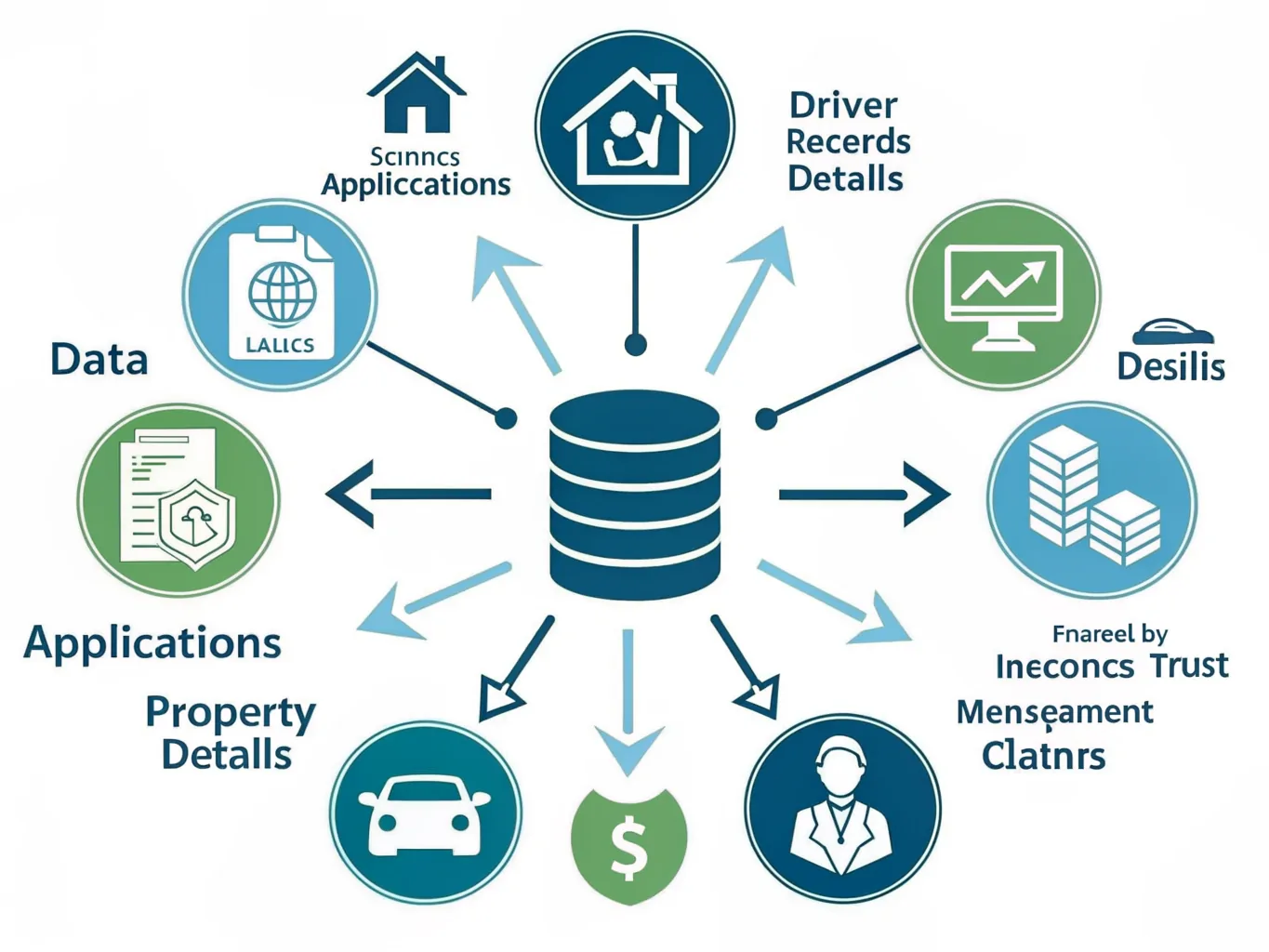
You already collect applications, driver records, property details, loss runs, and notes from every conversation. Enrichment is the step that fills the gaps in those records, corrects stale fields, and ties related files together so you are not quoting, binding, or adjusting from a half-finished picture. That is how insurance and data analytics work together on a live book of business: the numbers only help if the record behind them is complete.
Underwriting — the work of judging risk and setting a price — falls apart when a date of birth, occupancy, or prior-claim field is wrong. Pricing follows the same file. Claims follow it again. If the file is thin, every later step inherits the error.
Stop and think about the last submission you rushed because a carrier portal rejected a blank field. That is not a “data strategy” problem. That is a missing-field problem, and enrichment is built to close it before the file leaves your desk.
You do not need extensive resources to begin implementing data enrichment. You need a clear inventory of which fields actually move a quote, a bind, or a claim — and a way to keep those fields current without retyping them.
Why Traditional Data Management Falls Short
The generic playbook says “clean your CRM and export a spreadsheet.” In an agency, that playbook breaks on contact with the real file.
Your data exists across multiple systems. It can be found in applications, carrier portals, email threads, ACORD forms, photos, and call notes. Standard data clean-up often assumes all information is in one place, which is misleading. Rekeying the same insured from the application into the agency management screen, then into a carrier form, is how occupancy, VIN, and beneficiary fields drift.
Manual data entry can lead to outdated information. A loss run from last renewal is not the same as the claim that closed last month. A generic database does not know which source wins when they conflict. You do. Traditional tools rarely encode that rule, so staff become the integration layer.
There is another failure the generic approach never names: cooperation with carriers is not optional. If your submission doesn’t match what the underwriter accepts, it will get stuck. Enrichment that cannot speak in submission language is just a prettier contact list.
Skeptical? Fair. If “better data” only meant another dashboard, you would be right to ignore it. The issue is not dashboards. The main challenge is the poor transitions between the systems you currently use.
AI Solutions Built for Insurers
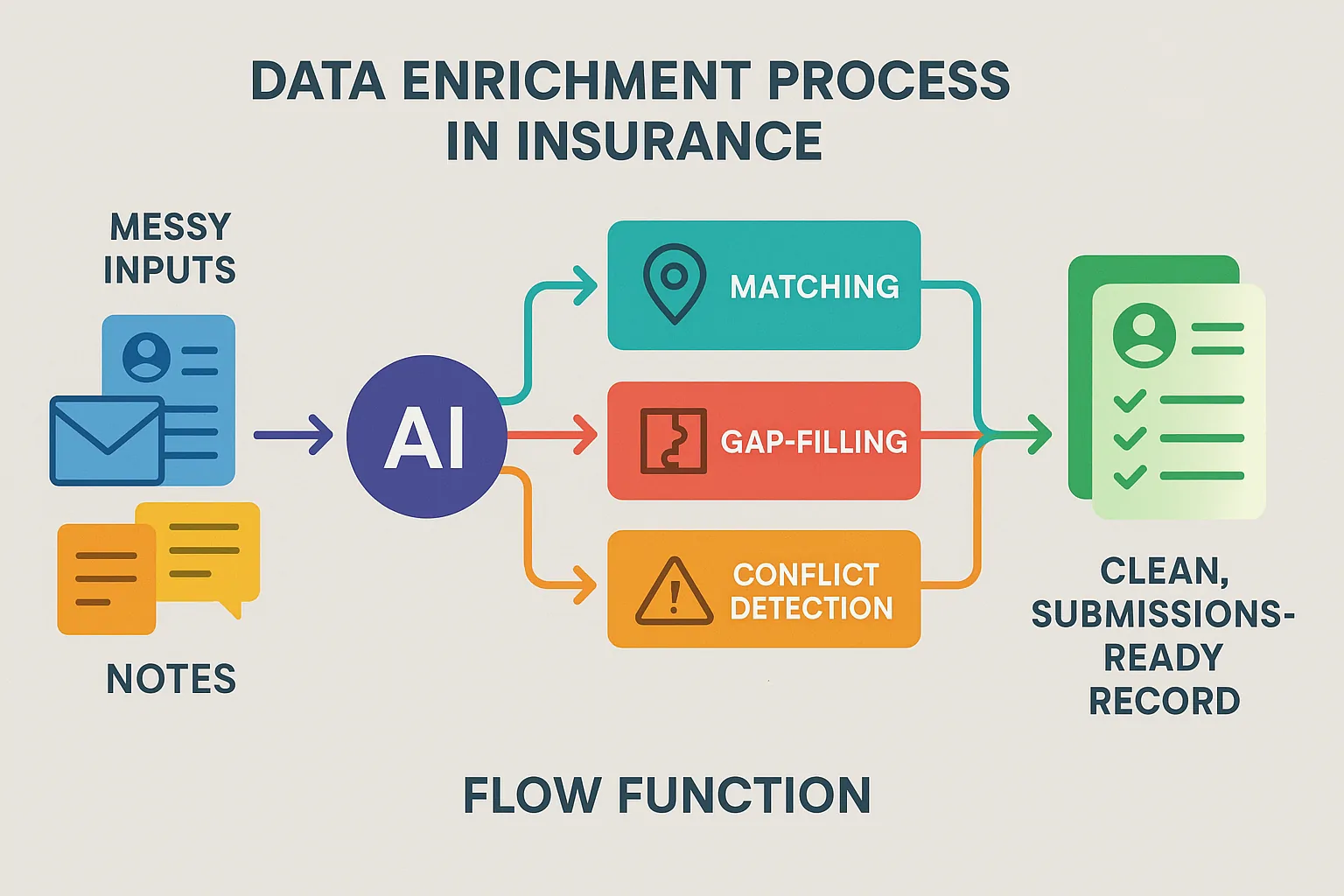
ai insurance solutions should seamlessly integrate with existing processes, enhancing data quality without complicating workflows. They should read the same messy inputs your staff already touch — applications, ACORD packets, emails, and notes — and return a cleaner record you can actually quote from. See also: ACORD Data Standards.
That is the adaptation. Generic tools ask you to standardize first, then automate. An insurer-shaped approach assumes the file arrives incomplete, duplicate, or inconsistent, and it treats matching, gap-filling, and conflict flags as the product. The goal is a submission-ready record, not a vanity score on “data quality.”
When effectively utilized, AI solutions can greatly enhance data enrichment in insurance by identifying missing required fields, aligning name and address variations, and flagging conflicts before a carrier rejects the submission.
What it should not do is invent facts. It is important to recognize that if a source does not support a field, the system should not only leave it blank but also notify the user to prevent misinformation. Guessing a roof year or a driving record is not enrichment. It is a future error in the claim file.
On the CRM side, I use Go High Level to manage client data. That is useful for pipelines, follow-ups, and household notes. It is not a substitute for the policy-admin or carrier systems your book actually runs on. Integration, in practice, means the enriched fields have a home in both places — marketing record and policy record — without a person copying them twice.
How Data Analytics Is Changing Insurance
Data analytics across the insurance industry is not a new reporting pack. It is a change in when you see risk, price pressure, and service load — before the renewal pile hits your desk.
Analytics only pays off after enrichment. Feed a model incomplete applications and you will get confident nonsense. Feed it records that agree across application, prior policy, and claim history, and you can see which accounts are underpriced, which households are underinsured, and which claims are stalling because a field never got updated.
For agents, the useful layer is practical, not actuarial. Which renewals need a conversation this month? Which leads were never quoted because a required field was blank? Which claim notes keep contradicting the original application? Those are analytics questions that sit on top of a cleaner file.
For agents involved in life insurance, this same principle applies to underwriting packets and in-force reviews, ensuring consistency and accuracy. See also: related resource.
Keep the family in view here. A wrong beneficiary, a stale tobacco answer, or a missing rider is not an abstract data issue. It is a file that will fail the people you sold the policy to. Analytics should highlight potential failures early in the process, rather than merely presenting them in a polished year-end report.
The impact on hit rate, loss ratio, or cycle time still has to be measured in your own book.
Benefits of Data Enrichment for Insurance Agents
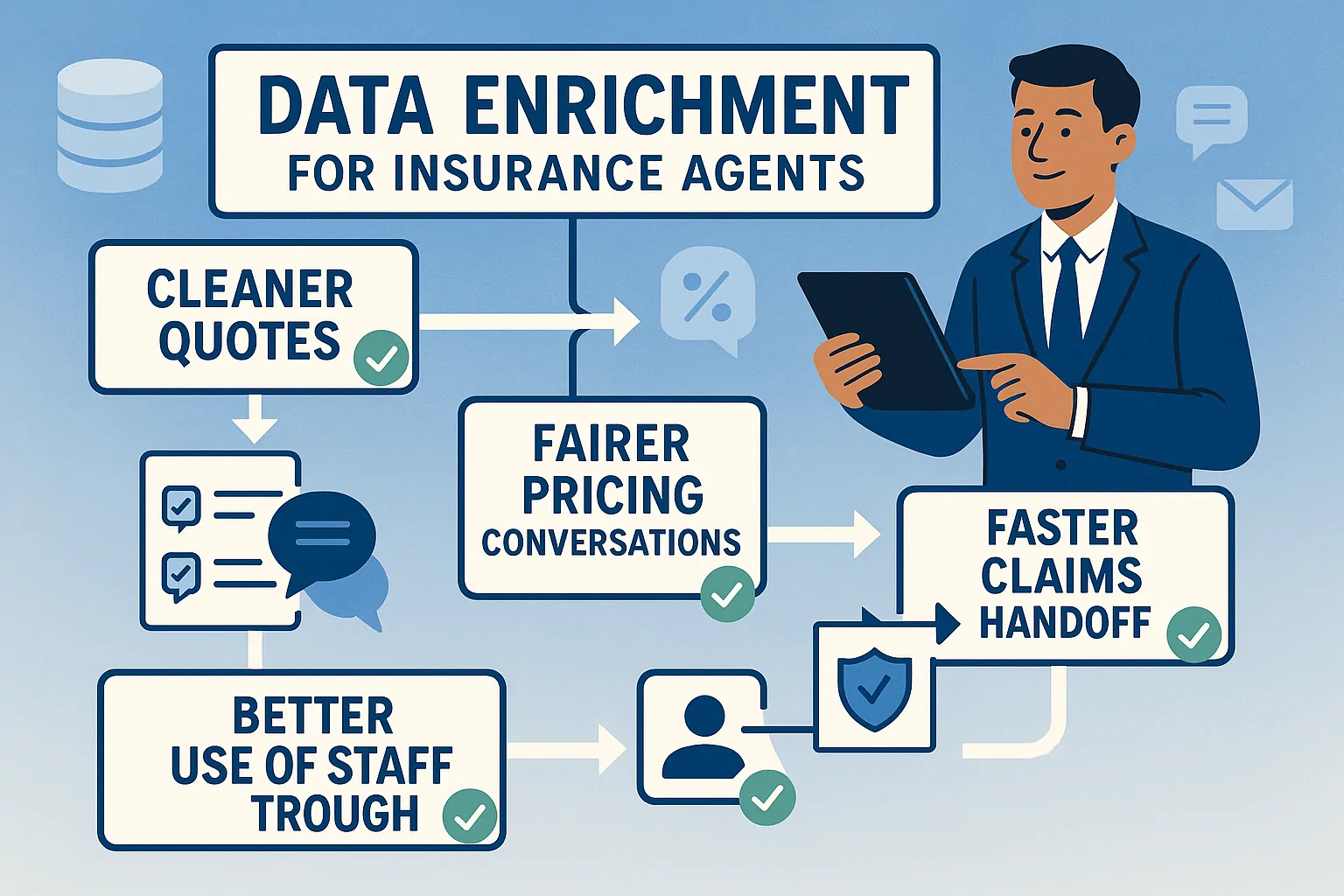
Here are the specific benefits of data enrichment for insurance agents, highlighting how it can streamline their workflows and improve client interactions.
Cleaner quotes. Required fields are present before you burn a market. Fewer “return to agent” messages. Less time hunting for a prior address or a vehicle identification number.
Fairer pricing conversations. When occupancy, credits, and loss history agree, you can explain the premium without guessing. That is how you protect the relationship and still hit your production goals.
Faster claims handoff. Adjusters do not want your marketing notes. They want a consistent insured, location, coverage, and loss description. Enrichment is what keeps those from contradicting each other.
Better use of staff time. Manual rekeying does not scale. Enrichment is supposed to take that rekeying off the producer and the CSR so they can actually talk to clients.
Lead follow-through. A lead with a missing phone, a duplicate household, or an unnamed spouse is not a lead. It is a half-record. If you are already automating outreach, start from a complete contact.
Success here is not a vanity dashboard. Success is fewer stalled submissions and fewer files that only one person in the office understands.
Avoid the misconception that data enrichment will lead to immediate, miraculous changes. Buy a shorter path from incomplete application to a file you would be willing to send to a carrier.
Compliance, Constraints, and Data Privacy
If you have concerns about data privacy, it is crucial to implement strict compliance measures and ensure that data is only used for legitimate purposes. Enrichment that slurps everything and stores it “just in case” is how agencies get into trouble.
You can only use data for quoting, servicing, or claims if you have a lawful reason to do so. Purpose matters. A marketing tag does not justify a medical detail. A claims file does not belong in a social media blast. Keep the minimum, name the source, and record who can see it.
You also cannot say things the file does not support. No guaranteed savings. No promise that a model “replaces underwriting.” No claim that a third-party database is always right. If a source conflicts with the application, a person still owns the decision.
Review cycles in this vertical are real. Carrier appointments, state rules, and vendor contracts all constrain what you can automate and what you can advertise. Those details have to be checked for your licenses and your vendors — not assumed from a generic SaaS checklist.
Before publishing, confirm the regulator, review cycle, and any prohibited claims for each state you serve with counsel or compliance. If the approval is not documented, leave the state-specific language out of the post.
With evolving privacy regulations, it is crucial to develop processes that remain compliant and adaptable to these changes. That means audit trails, consent where it is required, and a clear “do not enrich” path for sensitive fields.
Only use data from vendors who can clearly identify the source of each field.
Trade-offs and Considerations for Implementation
When considering implementation, be aware of the three main options available, each with its own costs and challenges.
Keep traditional data management. Spreadsheets, shared inboxes, and “the CSR knows.” Low software cost. High error cost. This fails as soon as volume or staff turnover rises.
Stay on manual entry, but add checklists. Better than chaos. Still slow. Still duplicate. Fine for a tiny book if one person owns every file.
Invest in AI-supported enrichment. Upfront cost, mapping work, and training. The bet is fewer rekeys and fewer rejected submissions over time. That can lead to long-term savings, but only if you measure it against your own labor and error rate — not a slide deck.
Other trade-offs you should name before you buy:
- Source quality vs. coverage. More databases is not better if they argue with each other.
- Speed vs. review. Auto-fill that nobody checks will create E&O exposure.
- CRM vs. policy system. I use Go High Level to manage client data; that does not replace the system of record for the policy. If those two drift, you have not enriched anything. You have created a second story about the same client.
- Staff trust. If producers do not believe the enriched field, they will overwrite it and you are back to chaos.
Typical scope in this vertical is not “boil the ocean.” It is one line of business, a defined field list, and a human review step on anything that changes premium or eligibility.
Typical pricing varies by the number of systems touched, the workflows in scope, and the amount of onboarding and support included. Publish the current offer only after sales confirms the package, exclusions, and delivery terms.
Edge Cases in Data Enrichment Implementation
Small insurance agencies face unique challenges, such as limited resources and the need for tailored solutions that meet their specific operational requirements. If one producer is also the CSR, a six-system integration project will die. Start with the fields that block submissions. Leave the rest.
Other cases that break a generic rollout:
- Households that are not households. Blended families, trusts, and farm operations do not match a simple “one buyer” model. Forced merges will create the wrong named insured.
- Surplus and specialty files. Unique exposures, manuscript endorsements, and carrier-specific apps do not map cleanly. Enrichment has to leave room for a human.
- Claims in flight. Updating a record mid-claim without a version history can look like you altered facts after the loss.
- Thin or new books. For agencies with limited historical data, reliance on third-party information can significantly influence the accuracy of records. That is a risk, not a shortcut.
- Conflicting loss runs. When two carriers disagree, the system should flag the conflict, not pick a winner in silence.
If your book is mostly one-off personal lines and you already close files cleanly, a heavy platform may be the wrong spend. If your pain is rekeying and rejected submissions, it is the right problem to solve — just not all at once.
Industry FAQ
Does enrichment change what I send to the carrier? It should complete and check the file you already intended to send. It should not silently swap answers the applicant gave you. If a field changes, you need to see it before transmit.
What if the enriched data is wrong? Then it is your file. Treat vendor data as a suggestion with a source. A person confirms anything that affects eligibility, price, or a claim. That is how you keep E&O in view.
Can a small independent shop do this without a data team? Yes, if the project is a short field list and one workflow — quotes, renewals, or claims intake — not a full “data lake.” Resource constraints are the constraint. Scope accordingly.
Where does this sit next to ACORD and carrier portals? Enrichment feeds the form; it does not replace the form. If the portal still needs a field, your process still needs that field. Automation around ACORD is a related job, not a magic bypass. See also: related resource.
Will this create a privacy problem with marketing tools? It can, if claims or underwriting fields leak into campaign lists. Keep servicing data and solicitation data apart. Social media is not a claims source.
What data analytics jobs exist in insurance? Agencies rarely hire a “data scientist” first. Data analytics insurance jobs show up as operations, underwriting support, claims quality, and producer enablement — people who own field definitions, vendor feeds, and the rules for when a human reviews a change. Carriers and MGAs staff that more formally; most independents need a clear owner for data analytics in insurance industry, not a new department.
Do I need proof this works in agencies like mine? Yes. A case study from another industry does not answer your question.
If you do not have an insurance-industry client or project yet, say that plainly and frame this as a framework, not a case study. If you do have one, name it and summarize the result.
### Next Steps for Insurance Agents: Practical Guidance for Implementation
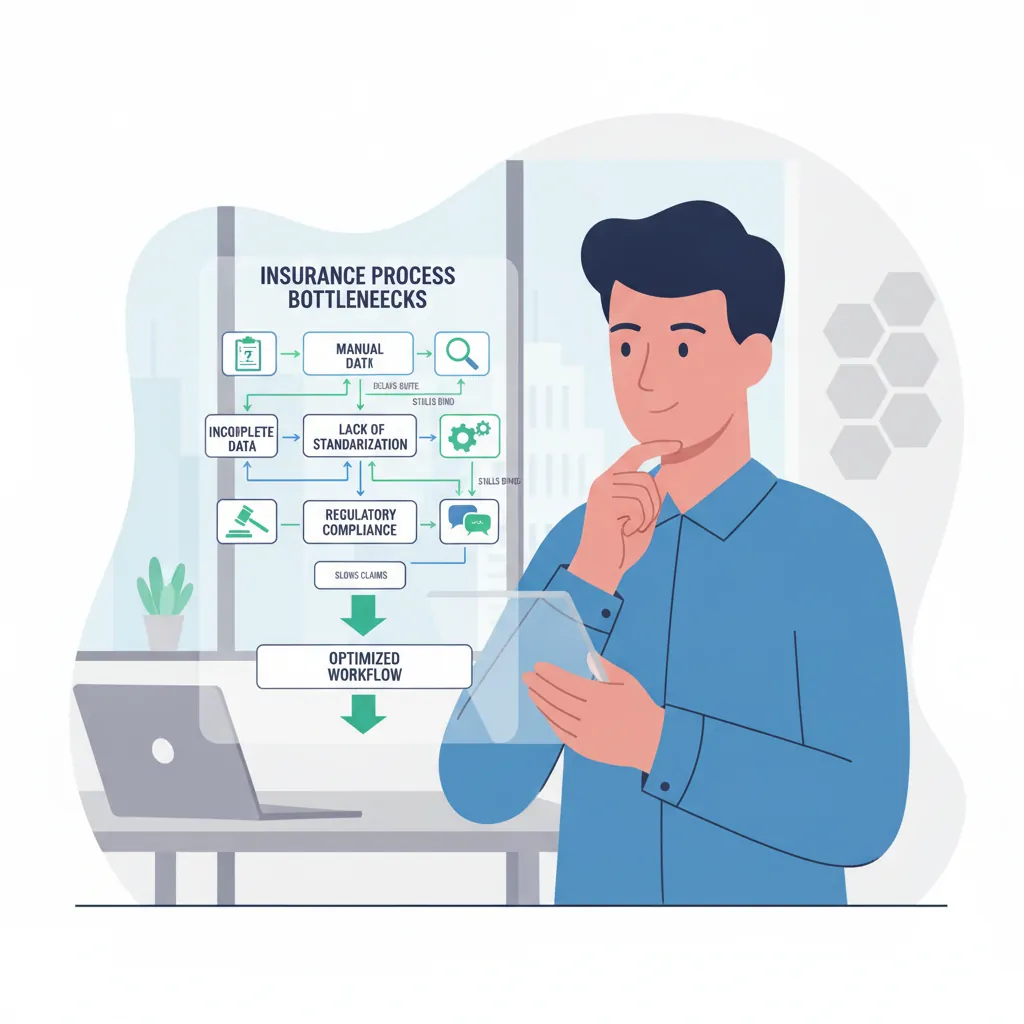
Map the five fields that most often stall a quote, a bind, or a claim in your office. If you cannot name them, you are not ready to buy software. If you can, you are ready to see whether automation can fill them without creating a second, conflicting record.
You are in control of scope. Start with one line of business, keep a human on anything that changes premium, and do not load a field you cannot source.
If you want that review in agency terms, Visit Arcus AI Solutions for more information on AI automation.