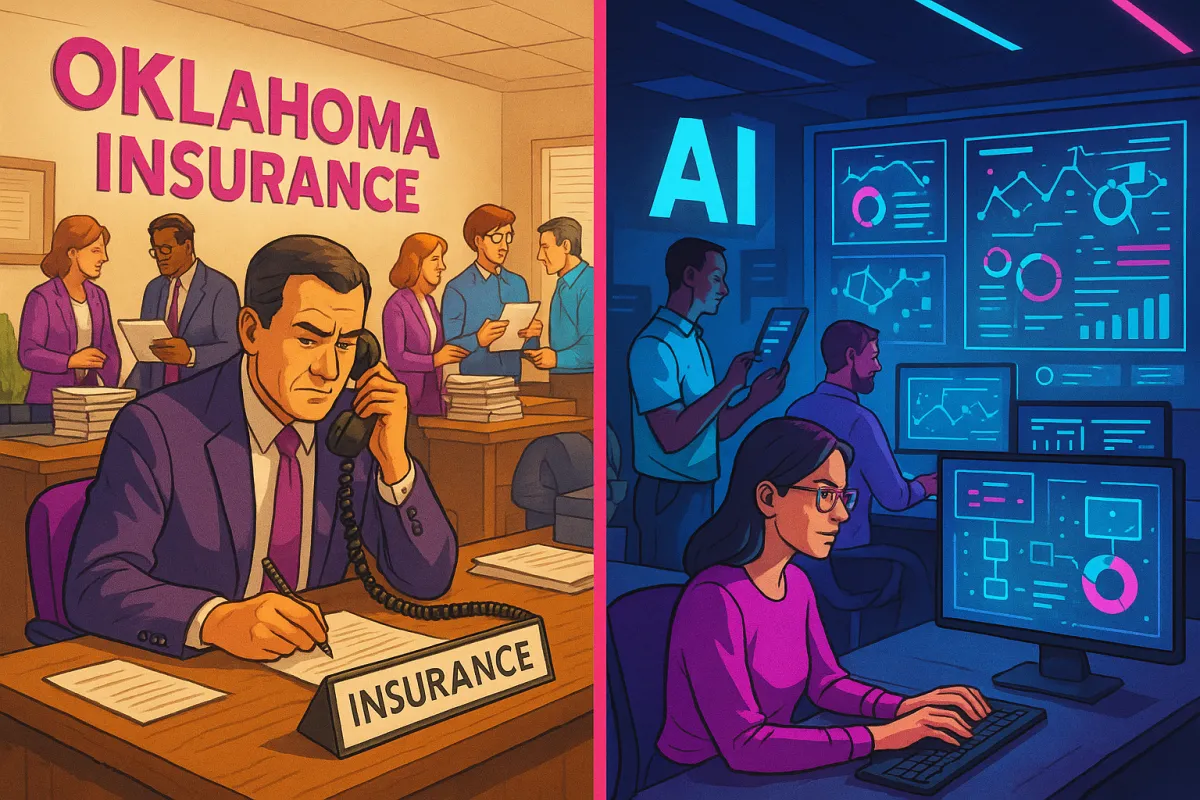
Why Not Integrating AI in Your Insurance Agency Is Riskier Than AI Integration
The Cost of Ignoring AI in Insurance
The stakes are high in the insurance industry. Oklahoma insurance agents face a crucial decision: embrace AI integration or risk falling behind. The truth is clear. Avoiding AI is riskier than integrating it. The regulatory landscape is shifting, and so is the competitive arena. If you’re not leveraging AI, you’re not just missing out on efficiency—you’re opening your agency to significant risks.
Introduction: The High Stakes of AI in Insurance
Oklahoma's Insurance Department has made it clear: AI brings risks, but the greater danger lies in avoiding it entirely. While agencies that integrate AI must navigate compliance and bias, those that do nothing will suffer from operational inefficiencies and diminished competitiveness. AI-native firms aren’t waiting; they’re gaining ground every day. You must decide: adapt or be left behind.
Understanding the Risks of Non-Integration
The Oklahoma Insurance Department explicitly outlines the risks associated with AI: inaccuracy, unfair discrimination, data vulnerability, and lack of transparency. These challenges demand controls and careful governance. Agencies that refuse to adopt AI are at a distinct disadvantage, as noted by McKinsey. They warn that firms not embracing AI risk being “left in the dust.” That’s a sobering reality for anyone in the Oklahoma insurance landscape.
Deloitte echoes this sentiment, emphasizing that the real issue isn’t the technology itself but the governance around it. Weak AI implementations often fail due topoor data foundations, legacy IT systems, and inadequate business-tech collaboration. This is not a reason to avoid AI; it’s a call to action to strengthen your agency’s infrastructure.
The Real Dangers of AI Mismanagement
Let’s address the elephant in the room. AI is not a silver bullet. Without proper controls, the risks escalate significantly. PwC highlights the potential for fines, lawsuits, and reputational damage when AI is poorly managed. The absence of effective governance can lead to inaccurate, arbitrary, or discriminatory outcomes. It's not just about technology—it's about how you use it.
Moreover, there’s a human cost. Agencies that fail to thoughtfully integrate AI risk losing invaluable human expertise. When technology takes over without the right strategy, it can create a knowledge gap that’s hard to bridge.
Implementing AI Safely: Strategies for Oklahoma Agents
So, how do you navigate this complex landscape? First, let's talk about necessary controls. Oklahoma guidelines emphasize the importance of establishing robust governance frameworks to mitigate AI risks.
Effective data management is crucial. You need to ensure that your data is clean, accurate, and representative. This means investing in technologies that promote collaboration between your IT department and business units. A cohesive approach will support a successful AI integration.
Look to successful examples within the industry. Agencies that have embraced AI for insurance fraud detection are reaping the benefits. They’re not just compliant; they’re ahead of the curve. By implementing AI-aware fraud detection and monitoring practices, these agencies are safeguarding their operations while enhancing efficiency.
Conclusion: Embracing AI as a Strategic Necessity
The reality is undeniable. Not adopting AI poses greater risks than the challenges of its integration. Oklahoma insurance agents must view AI as an essential tool for enhancing efficiency and competitiveness. The landscape is evolving, and the choice is yours.
Take action now.Assess your current AI strategy and confront the risks head-on. This isn’t just about keeping pace—it’s about thriving in a fast-changing environment. The cost of inaction is steep. Don’t let your agency become a relic of the past.
FAQ
Q: What are the main risks of not integrating AI in insurance?
A: The primary risks include operational inefficiencies, competitive disadvantages, and exposure to regulatory scrutiny. Agencies that avoid AI can fall behind in responsiveness and innovation.
Q: How can Oklahoma insurance agents ensure compliant AI use?
A: Agents should establish robust governance frameworks, prioritize data accuracy, and invest in collaboration between IT and business units to manage AI risks effectively.
Q: What are some examples of successful AI integration in insurance?
A: Agencies utilizing AI for fraud detection have seen significant improvements in efficiency and compliance. These implementations showcase how AI can enhance risk management and operational effectiveness.
Q: What is the role of human expertise in AI adoption?
A: Human expertise is crucial for guiding AI integration. Agencies must ensure that knowledgeable staff oversee AI systems to prevent reliance on technology alone, which can lead to knowledge gaps.
Q: What should agencies focus on when implementing AI?
A: Agencies should prioritize governance, data management, and training to ensure that AI is integrated safely and effectively, minimizing risks and maximizing benefits.
Oklahoma Insurance Department bulletin— Oklahoma Insurance Department Bulletin
NAIC AI Model Bulletin— NAIC AI Model Bulletin Draft
global insurance AI regulation— Regulation of AI in Insurance
majority health insurers embrace AI— NAIC Survey on AI Adoption


